How to Start a Small Business in Pakistan in 2026
Starting a small business in Pakistan can be an exciting opportunity for individuals who want to become entrepreneurs, earn additional income, or build a sustainable company. With opportunities in retail, e-commerce, food, technology, manufacturing, education, and professional services, there are many business models that aspiring entrepreneurs can explore.
However, starting a successful business requires more than simply having an idea. You need to understand your target customers, evaluate market demand, plan your investment, choose the right business structure, establish your operations, and develop a marketing strategy.
Whether you want to start a business from home, open a shop, launch an online store, or provide professional services, this guide explains the essential steps involved in starting a small business in Pakistan in 2026.
If you are still exploring opportunities, check out our guide to 25 profitable small business ideas in Pakistan to discover potential business opportunities across different industries.
1. Choose the Right Business Idea
The first step is choosing a business idea that matches your skills, interests, budget, and the needs of your target market.
Some entrepreneurs prefer businesses that require physical locations, such as retail stores, restaurants, workshops, or salons. Others choose online businesses, freelancing, consultancy, or service-based companies that can be operated with relatively lower initial investment.
Before selecting an idea, consider the following:
- What products or services do you want to offer?
- Do you have relevant skills or experience?
- Who are your potential customers?
- Is there demand for your products or services?
- Who are your competitors?
- How much investment will you need?
- Can the business generate sustainable revenue?
Choosing a business based on market demand rather than personal excitement alone can help reduce the risk of failure.
2. Research Your Market
Market research helps you understand your customers, competitors, pricing, and potential business opportunities.
Before investing money, try to learn as much as possible about the market in which you plan to operate.
Identify Your Target Customers
Determine who is most likely to purchase your products or services. Your target customers may be individuals, families, retailers, companies, manufacturers, offices, or other businesses.
Understanding your target audience helps you make better decisions about pricing, product selection, marketing, location, and customer service.
Study Your Competitors
Research businesses that are already offering similar products or services. Examine their prices, customer reviews, marketing strategies, product quality, locations, and online presence.
Look for opportunities to differentiate your business by offering better service, competitive pricing, specialized products, convenient delivery, or a more attractive customer experience.
Test Your Business Idea
Whenever possible, test your business idea before making a major investment.
You can begin by offering your products or services to a small group of customers, creating a basic website, running a limited advertising campaign, or collecting feedback from potential customers.
Testing helps you understand whether people are actually interested in purchasing what you plan to offer.
3. Prepare a Business Plan
A business plan provides a roadmap for starting and managing your business. It helps you organize your goals, financial requirements, marketing strategy, operations, and expected growth.
A simple business plan does not need to be complicated. It should clearly explain how your business will operate and generate revenue.
Important Elements of a Business Plan
- Business overview: Describe your business idea and what you plan to offer.
- Target market: Identify your potential customers.
- Products and services: Explain what you will sell.
- Competitor analysis: Identify existing businesses in your market.
- Marketing strategy: Explain how you will attract customers.
- Startup costs: Estimate your initial investment.
- Operating expenses: Calculate recurring monthly expenses.
- Revenue projections: Estimate your expected sales.
- Growth plan: Define your future business goals.
4. Calculate Your Startup Investment
One of the most important steps when starting a business is calculating how much money you will need.
Many businesses fail because entrepreneurs underestimate startup costs or spend too much money before generating revenue.
Depending on the type of business, your initial investment may include:
- Business registration and legal expenses
- Shop or office rent and security deposit
- Equipment and machinery
- Initial inventory or raw materials
- Website development and hosting
- Branding and logo design
- Packaging and printing
- Marketing and advertising
- Employee salaries
- Utilities and operational expenses
- Transportation and delivery costs
It is also advisable to maintain some emergency funds to cover unexpected expenses during the initial months of operation.
5. Choose Your Business Structure
Before starting operations, consider the legal structure that best suits your business.
Different business structures may have different registration requirements, responsibilities, taxation considerations, and compliance obligations.
Common business structures in Pakistan include:
Sole Proprietorship
A sole proprietorship is a business owned and operated by one individual. It is commonly used by small businesses, freelancers, independent professionals, and individual entrepreneurs.
Partnership
A partnership involves two or more individuals who agree to operate a business together. Partners should clearly define their responsibilities, investment contributions, profit-sharing arrangements, and decision-making responsibilities.
Private Limited Company
A private limited company is a separate legal entity registered under the applicable corporate laws. This structure may be suitable for businesses planning to expand, bring in investors, or establish a formal corporate organization.
The appropriate structure depends on your business activities, ownership, investment, and long-term plans. Consult a qualified professional if you need assistance selecting the appropriate structure.
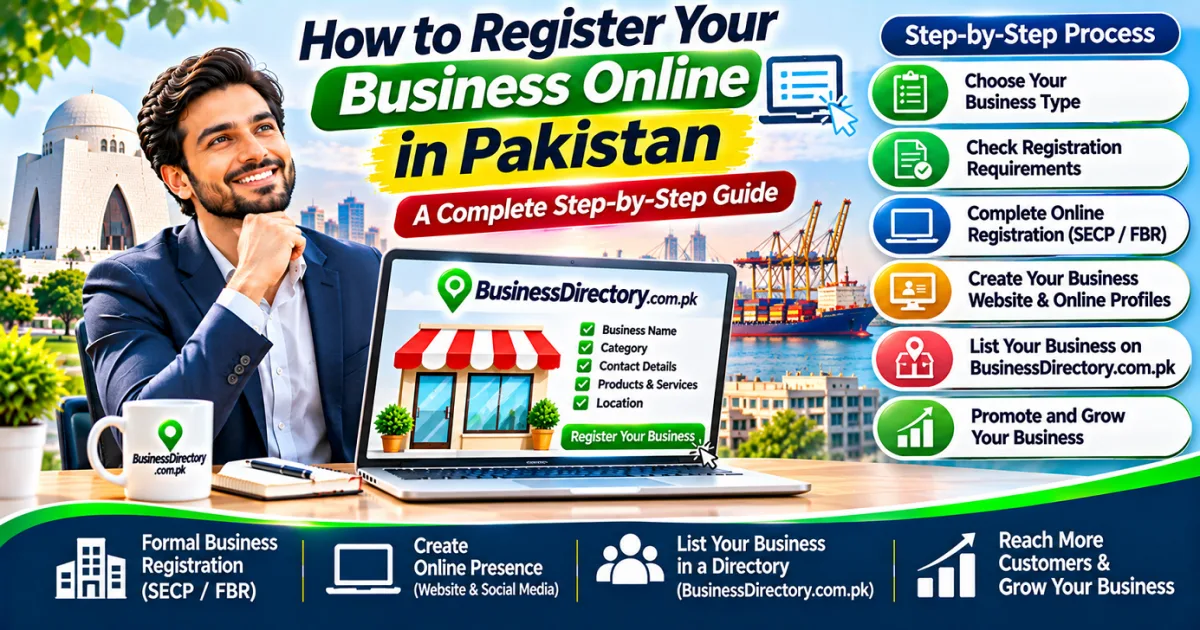
6. Register Your Business and Understand Tax Requirements
Depending on your business structure and activities, you may need to complete relevant registration, tax, licensing, or regulatory requirements before or during your business operations.
Business owners in Pakistan may need to consider requirements involving relevant government authorities, including:
- Federal tax registration and applicable income tax requirements
- Corporate registration where applicable
- Provincial sales tax requirements for relevant services
- Business-specific licenses and permissions
- Local authority requirements
- Industry-specific regulatory approvals
Requirements can vary depending on the business type, location, legal structure, and activities. Always verify current requirements with the relevant official authorities or a qualified tax and legal professional before making registration decisions.
7. Choose the Right Business Location
If your business requires a physical location, selecting the right premises can significantly affect your success.
Consider factors such as:
- Customer accessibility
- Foot traffic
- Parking availability
- Nearby businesses
- Rental costs
- Security
- Electricity and internet availability
- Space requirements
- Delivery and transportation access
For online or home-based businesses, you may not need a commercial location initially. This can help reduce expenses while you test the market and build your customer base.
8. Find Reliable Suppliers
If your business sells products or requires materials, finding reliable suppliers is essential.
Research multiple suppliers before making purchasing decisions. Compare prices, product quality, payment terms, delivery times, minimum order quantities, and after-sales support.
Building strong supplier relationships can help your business maintain product quality, manage inventory, and improve profitability.
Online business directories can help entrepreneurs discover manufacturers, wholesalers, distributors, and service providers in different industries.
Learn more about how business directories work and how they help users discover companies and services.
9. Create Your Business Brand
A strong brand helps customers recognize your business and understand what makes it different from competitors.
Branding involves more than choosing a business name. It includes your logo, colors, communication style, packaging, website, marketing materials, and customer experience.
Consider the following when creating your brand:
- Choose a memorable business name.
- Check domain name availability.
- Create a professional logo.
- Choose consistent brand colors and typography.
- Develop a clear business message.
- Use professional product and business photographs.
- Create consistent marketing materials.
10. Build Your Online Presence
In today's digital environment, customers frequently search online before contacting a business or purchasing a product.
Establishing an online presence can help customers discover your business, learn about your products and services, and contact you.
Create a Professional Website
A business website can provide information about your company, products, services, contact details, location, pricing, and other important information.
Depending on your business, your website may include an online store, inquiry form, appointment booking, product catalog, or customer support features.
Use Social Media
Social media platforms can help businesses communicate with customers, promote products, publish content, and build brand awareness.
Choose platforms that are relevant to your target audience and business model.
List Your Business Online
Online business directories provide another opportunity for customers to discover businesses.
Creating a complete business listing with accurate contact details, business descriptions, photographs, website information, and relevant categories can help make your business easier to discover.
Read our article What Is a Business Directory and How Does It Work? to understand how online business directories help customers discover companies.
You can also explore BusinessDirectory.com.pk to discover businesses across Pakistan or register your own business profile.
11. Develop a Marketing Strategy
Marketing is essential for attracting customers and generating sales. Even a high-quality product or service may struggle if potential customers do not know that your business exists.
Your marketing strategy should focus on reaching the right customers through suitable channels.
Marketing Methods for Small Businesses
- Social media marketing
- Search engine optimization
- Google advertising
- Facebook and Instagram advertising
- WhatsApp Business
- Email marketing
- Content marketing and blogging
- Customer referrals
- Local marketing
- Online business directory listings
Small businesses should begin with marketing methods they can manage consistently and measure effectively.
12. Set Your Prices
Pricing your products and services correctly is important for maintaining profitability and attracting customers.
Your pricing should consider:
- Product or service costs
- Operating expenses
- Competitor pricing
- Customer purchasing power
- Market demand
- Desired profit margin
- Taxes and other applicable costs
Avoid setting prices too low simply to attract customers. Your pricing should allow you to cover expenses and generate a sustainable profit.
13. Manage Your Business Finances
Financial management is one of the most important aspects of running a small business.
Maintain records of your income, expenses, purchases, sales, inventory, customer payments, supplier payments, and other financial transactions.
Consider using accounting software or a business management system to organize your financial information.
Good financial management helps you understand whether your business is profitable, identify unnecessary expenses, and make better decisions about future investments.
14. Focus on Customer Service
Customer satisfaction can help businesses develop repeat customers and positive recommendations.
Respond to customer inquiries promptly, communicate clearly, deliver products or services as promised, and handle complaints professionally.
Customers who receive a positive experience may recommend your business to friends, family, colleagues, and other potential customers.
15. Start Small and Grow Gradually
Many entrepreneurs make the mistake of investing too much money in infrastructure, inventory, or advertising before understanding their market.
Starting small allows you to test your business model, learn from customer feedback, manage expenses, and gradually expand your operations.
As your business grows, you can consider expanding your product range, hiring employees, opening additional locations, investing in marketing, or entering new markets.
Common Mistakes to Avoid When Starting a Business
New entrepreneurs should be aware of common mistakes that may negatively affect their businesses.
- Starting without proper market research
- Investing more money than necessary
- Ignoring competitors
- Underestimating operational expenses
- Choosing the wrong target customers
- Neglecting marketing and online visibility
- Failing to maintain financial records
- Offering products or services without understanding customer demand
- Ignoring customer feedback
- Expanding too quickly
25 Small Business Ideas to Consider
If you have not yet decided which business to start, explore our detailed article featuring 25 profitable small business ideas in Pakistan.
The guide covers opportunities in e-commerce, freelancing, food, retail, digital marketing, education, home services, technology, and several other industries.
Find Businesses and Services in Pakistan
Starting and managing a business often requires finding reliable suppliers, manufacturers, professional service providers, contractors, consultants, and other business contacts.
Business directories can help entrepreneurs discover companies operating in different industries and locations.
BusinessDirectory.com.pk provides a platform where users can explore businesses, discover services, and find business information across Pakistan.
Explore our business directory to discover businesses or browse the cities directory to explore businesses by location.
Business owners can also register their businesses and create an online profile to showcase their company, products, services, and contact information.
Conclusion
Starting a small business in Pakistan requires planning, market research, financial management, customer understanding, and consistent effort.
The first step is choosing a business idea that matches your skills, investment, and market demand. After that, develop a business plan, understand the applicable registration requirements, establish your operations, build your brand, and create a marketing strategy.
You do not necessarily need to start with a large investment or a complicated business structure. Many businesses begin on a small scale and grow gradually as they attract customers and develop their operations.
With the right planning and execution, your business idea can become an opportunity to build a sustainable source of income and long-term growth.
Ready to start your business journey? Explore business opportunities, find suppliers, and discover service providers through BusinessDirectory.com.pk.
Frequently Asked Questions
How can I start a small business in Pakistan?
Start by choosing a business idea, researching the market, identifying your target customers, preparing a business plan, calculating your investment, understanding registration requirements, and developing a marketing strategy.
How much money is required to start a business in Pakistan?
The investment required depends on the type of business. Online services and freelancing may require relatively little initial investment, while retail shops, restaurants, manufacturing, and businesses requiring equipment or inventory may need substantially more capital.
Which business is best to start in Pakistan?
The best business depends on your skills, investment, location, experience, and market demand. Potential opportunities include e-commerce, digital marketing, freelancing, food businesses, retail, education, technology, and professional services.
Can I start a business from home in Pakistan?
Yes. Many businesses can be operated from home, including online stores, freelancing, tutoring, home-based food businesses, digital marketing, graphic design, software development, and consultancy services.
Do I need to register my business in Pakistan?
Registration and regulatory requirements depend on your business structure, activities, and applicable laws. Business owners should verify the requirements relevant to their specific business with the appropriate authorities or qualified professionals.
How can I promote my new business in Pakistan?
You can promote your business through websites, social media, search engine optimization, online advertising, WhatsApp Business, referrals, local marketing, and online business directories.
How can I find suppliers for my new business?
You can find suppliers through wholesale markets, trade exhibitions, industry networks, online searches, manufacturer websites, and business directories. Research suppliers carefully and compare prices, quality, and reliability before making purchasing decisions.